
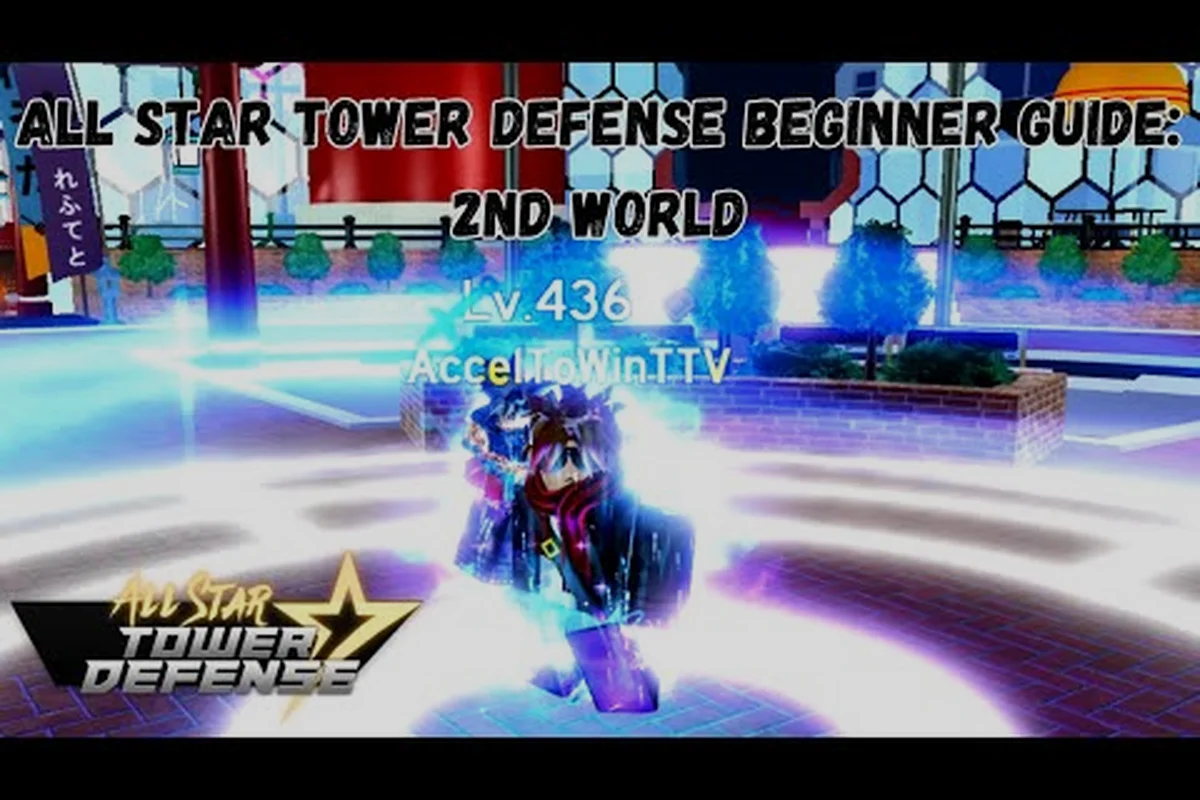
World 2 in All Star Tower Defense isn't just another set of stages — it's the gateway to the game's most demanding content, including raids, the Infinity Tower, and tournament battles. This astd world 2 guide breaks down exactly what you need to unlock World 2, which units deserve your resources first, and how to farm astd tournament points efficiently once you're there. If you've been grinding through the Beginner Saga and wondering what comes next, this is the roadmap you need.
The jump from World 1 to World 2 is significant because the enemy scaling, unit requirements, and reward structures all shift dramatically. Players who rush in without preparing their roster often hit a wall within the first few stages, wasting hours on failed attempts. Understanding the unlock criteria and the astd story mode rewards available along the way will save you from that frustration and set you up for consistent progress.
World 2 Unlock Requirements and Progression Path
Before you can even think about raids or tournament play, you need to clear the gate that separates World 1 from World 2. The unlock process is straightforward but demands a properly leveled roster and a solid understanding of core mechanics. According to the official All Star Tower Defense page on Roblox, the game is designed around teaming up with friends for Story Mode or the Infinity Tower, which means solo players need to be even more deliberate with their unit choices.
The primary requirement is completing all Story Mode stages in the Beginner Saga and World 1. Each stage has a recommended level range, and while you can technically attempt stages above your level, the damage falloff makes it impractical. Here's the progression path you should follow:
-
Finish the Beginner Saga — These early stages teach you the fundamentals of unit placement, upgrade timing, and economy management. Complete every stage with at least a 2-star rating to maximize your astd story mode rewards.
-
Clear World 1 Story Mode — The final stages of World 1 require a team of units around level 80-100. Focus on leveling your core damage dealers first, because support units won't carry you through the later waves.
-
Reach Player Level 50 — Your account level gates access to World 2. You'll earn experience from every stage completion, so grinding earlier stages for gems and unit levels naturally pushes your account level up.
-
Defeat the World 1 Final Boss — The last stage of World 1 features a boss with significantly higher HP than anything you've faced. Bring at least two dedicated boss-killer units and a slow or stun unit to control the adds.
Once you've cleared these requirements, World 2 opens up with a new set of stages that introduce tougher enemy types and more complex map layouts. The difficulty spike is noticeable but manageable if you've been consistent with your unit investment. Players who skipped side content often find themselves underleveled here, which is why our beginner saga guide emphasizes thorough completion of every available stage.
What Changes in World 2 Stages
World 2 stages aren't just harder versions of what you've seen before — they introduce new mechanics that force you to adapt your strategy. Enemy types gain new abilities, such as shields that require specific damage types to break, and some stages feature environmental hazards that restrict where you can place units.
The astd story mode rewards in World 2 are substantially better than World 1, with higher gem payouts per stage and a chance to earn exclusive units from stage completion. This makes World 2 the primary farming location for mid-game players, especially those preparing for raid content.
Building Your Raid Unit Priority List
Raids are where World 2 really shines, offering some of the best rewards in the game including exclusive units, large gem payouts, and astd tournament points that fuel competitive play. However, raids demand a specialized roster — you can't just bring your Story Mode team and expect to clear them. Understanding which astd raid units deserve your investment is critical.
| Unit Role | Why It Matters | Recommended Investment |
|---|---|---|
| Boss Killers | Raid bosses have massive HP pools; single-target DPS units are essential | Level 120+ with at least one trait reroll |
| Crowd Control | Adds spawn continuously during boss fights; stuns and slows keep them off your damage dealers | Level 100+ with cooldown reduction traits |
| Support Buffers | Damage buffs and attack speed boosts amplify your entire team's output | Level 90+; prioritize survivability |
| Farm Units | Early-wave economy units that generate gems so you can afford your heavy hitters | Level 80+; upgrade path matters more than base stats |
The astd raid guide consensus among top players is that you should focus on building a core of five to six raid-ready units before attempting any raid difficulty above Normal. Attempting Hard or Nightmare raids with an underleveled roster wastes both time and raid tokens, which are a limited resource.
Top Raid Units to Prioritize
While the meta shifts with each update, certain units consistently perform well in raid content, and according to community data gathered from recent update threads, these units represent the safest investments for your resources. For example, in the current World 2 raid rotation, units like Ichigo (Vasto Lorde) and Light Yagami maintain top-tier DPS due to their multi-hit attacks and global range, which are critical for clearing the boss's minion waves efficiently. This reliability stems from their ability to bypass the frequent stun mechanics in Infinite Mode, making them less risky than flashier, single-target nukers that often fall off when the meta introduces new debuffs. Prioritizing these proven staples ensures your team composition remains viable across both story mode rewards and tournament points grinding, even if a patch shifts the numbers slightly.
-
Ruffy (Gear 5) — Exceptional crowd control with a massive AoE ultimate that also deals respectable boss damage. His trait synergy with attack speed buffs makes him a staple in most raid compositions.
-
Koku (Ultra Instinct) — The premier boss killer in the current meta. His single-target damage output is unmatched, and his dodge mechanic lets him survive longer in sustained fights.
-
Vegu (Evolved) — A hybrid unit that handles both wave clear and boss damage. While not the best at either role, his flexibility makes him valuable for players who can't afford multiple specialized units.
-
Zaruto (Six Paths) — Provides utility through damage reduction and enemy debuffs. He won't top damage charts, but he makes your entire team more effective.
For a more detailed breakdown of unit rankings and team compositions, check our ASTD tier list guide, which covers the current meta across all game modes. That resource is especially useful for World 2 raids, where boss resistances and wave timings differ sharply from story mode—so a unit that dominates early maps, like a cheap AoE nuker, may fall off against the high-HP raid bosses that demand sustained single-target damage. Pairing that tier list with the tournament points you earn from raid clears lets you prioritize upgrades efficiently, ensuring your top five units align with the specific elemental weaknesses of each World 2 boss rather than wasting resources on off-meta picks.
Raid Mechanics and Team Composition Strategies
Understanding raid mechanics is just as important as having the right units. Each raid boss has unique attack patterns, phase transitions, and add spawns that require specific responses. The astd raid guide approach that most successful teams use involves assigning roles before the fight starts, rather than improvising mid-battle.
Here's a breakdown of the core raid mechanics you'll encounter: every run in World 2 hinges on managing the Infinite Mode timer and your Tournament Points simultaneously. Unlike story mode, where rewards are static, raid bosses scale in HP and damage each wave, forcing you to rotate between damage dealers and stunners. For example, bringing a maxed-out astd raid unit like Shadow Fiend early lets you bank points for the final boss, but neglecting a cheap AoE farmer for the first 10 waves will bleed your lives. Understanding this trade-off—offense versus survival—is the difference between a clean clear and a wasted run.
| Mechanic | Description | Counter Strategy |
|---|---|---|
| Phase Transitions | Boss gains new abilities at 75%, 50%, and 25% HP | Save ultimate abilities for phase transitions to burst through dangerous windows |
| Add Spawns | Minions appear at set intervals or when triggered by boss abilities | Designate one player to handle adds while others focus the boss |
| Enrage Timer | Boss deals increasing damage after a set time | Prioritize DPS over survivability in the later stages of the fight |
| Targeted Attacks | Boss marks a random unit for a powerful attack | Keep a decoy unit with high HP or dodge chance to absorb these hits |
The key insight from experienced raiders is that positioning matters more than raw stats. Units placed on hills or elevated positions gain damage bonuses, and spreading your team across multiple lanes prevents a single AoE attack from wiping your entire roster. Our hill placement guide covers this in detail, but the core principle is to never cluster your damage dealers together.
Team Composition Framework
Building a raid team requires balancing several factors, and the most successful compositions in World 2 follow a framework that covers all essential roles without overlap. You need a primary damage dealer capable of handling the Infinite boss’s high HP pools, a secondary unit for crowd control on the swarming mobs, and a support unit to buff attack speed or provide stuns during the final phase. For example, pairing a maxed-out ranged unit like a high-tier archer with a melee tank that holds aggro while your astd raid units focus on DPS ensures you don’t waste tournament points on redundant roles, which is critical since story mode rewards often dictate your early unit pool.
-
Two boss killers — At least one should have a trait that boosts single-target damage. These units handle the primary DPS responsibility.
-
One crowd control unit — Someone who can stun, slow, or knock back groups of enemies. This keeps adds from overwhelming your damage dealers.
-
One support buffer — A unit that increases your team's damage output or attack speed. The difference between a 2-minute and 4-minute raid clear is often just having the right buffer.
-
One flex slot — This can be a second crowd control unit, an additional boss killer, or a tanky unit to absorb targeted attacks. The choice depends on the specific raid boss you're facing.
Players who follow this framework report significantly higher clear rates, even with units that aren't top-tier in the current meta. The flexibility of the flex slot lets you adapt to each raid's unique mechanics without rebuilding your entire roster.
Tournament Points and Competitive Rewards
Tournament mode is the competitive heart of World 2, where players compete for rankings, exclusive rewards, and astd tournament points that unlock special items in the tournament shop. Unlike story mode or raids, tournaments run on a seasonal schedule with rotating rules and unit restrictions.
The tournament point system operates on a completely different logic than standard currencies like gold or gems, as it’s a pure performance metric rather than a spendable resource. In World 2, your point yield is calculated from your final placement in each competitive match, but the scaling is deliberately exponential—securing first place might net you 500 points, while second place drops to 300, and third falls to 150, meaning a single top-tier win can outpace several mid-tier finishes. This steep curve is designed to reward consistent dominance over grinding out low-stakes matches, so you should prioritize high-skill loadouts and save your strongest astd raid units for tournament entries to maximize your weekly leaderboard climb.
| Placement | Points Earned | Notes |
|---|---|---|
| 1st Place | 500 points | Requires near-perfect play and a top-tier roster |
| Top 10% | 200 points | Achievable with a solid team and good strategy |
| Top 50% | 75 points | Most active players land here |
| Participation | 25 points | Guaranteed for completing at least one match |
The tournament shop rotates its inventory each season, featuring exclusive units, trait rerolls, and cosmetic items that can't be obtained anywhere else. Saving your astd tournament points for the right items is crucial — spending them on early-season inventory often means missing out on better options later.
Tournament Strategy and Point Farming
Farming tournament points efficiently requires a fundamentally different approach than raiding or story mode, where raw damage output and wave-clearing speed reign supreme. Tournament matches introduce unique, season-specific modifiers—such as reduced unit cooldowns, enemy health scaling, or restricted unit types—that can completely invalidate your standard astd raid guide loadouts. To adapt quickly, prioritize a flexible core of versatile units like the Eternal Swordsman or Timekeeper, which perform well under most rule sets, and always check the season's patch notes before building your team. For example, if the current modifier halves your cash income, you'll want to lean on cheaper early-game units like the Frost Archer to stabilize your economy, rather than rushing an expensive meta carry. This proactive adjustment, rather than brute-force strategy, is what separates consistent top-100 finishes from mid-tier point hauls, as you'll waste fewer runs learning the rules mid-match.
The most efficient point farming strategy reported by players involves focusing on placement rather than win rate. Even if you can't consistently win matches, finishing in the top half of each tournament grants decent points. Over a full season, these smaller payouts add up significantly.
Key tournament strategies in All Star Tower Defense’s World 2 hinge on maximizing your point yield per run by prioritizing high-value targets and wave-clearing efficiency. For example, focusing on boss rushes and elite enemy clusters early—using units like a maxed-out Light or a well-placed Blackbeard for AoE—ensures you bank 1.5x the points of a passive farmer. Pair this with a dedicated point-boost unit (e.g., a support like Bulma or a damage dealer with a point multiplier) and time your ability activations during double-point windows, as each missed burst can cost you 200+ tournament points by the final wave.
-
Play early in the season — Competition is softer in the first few days, making it easier to secure high placements.
-
Specialize in one tournament format — Whether it's standard, restricted, or speed tournaments, mastering one format beats being average at all three.
-
Track the meta shifts — Tournament rules often ban or restrict top-tier units, creating opportunities for off-meta picks to shine.
-
Coordinate with a team — Team tournaments offer better point payouts per match, and having a coordinated group gives you a massive advantage.
For players looking to maximize their tournament earnings, our PVP guide covers the competitive meta in depth, including which units perform best under tournament restrictions. Because tournament brackets often ban top-tier raid units like those from World 2's later stages, understanding the next-best alternatives—such as farmable story mode rewards or lower-cost infinite strategy staples—can mean the difference between a top-100 finish and a mid-tier payout. We break down point-per-run efficiency and team synergy so you can adapt your loadout without wasting valuable stamina on suboptimal compositions.
Advanced World 2 Strategies and Infinite Mode Preparation
Once you've cleared World 2's story stages and established a solid raid team, the next challenge is the Infinity Tower — an endless mode that tests your team's endurance and your strategic decision-making. The astd infinite strategy that works best differs significantly from raid or tournament approaches because you're fighting for survival over dozens of waves rather than a single boss encounter.
The Infinity Tower scales enemy difficulty continuously, which means your team needs to be built for sustained performance rather than burst damage. Economy units become more valuable here because you'll need to keep upgrading your damage dealers throughout the run. According to community reports, most successful Infinity Tower runs use a balanced team that can handle both air and ground enemies, with at least one unit that excels at wave clearing.
Key differences between Infinite and other modes: Unlike Story or Tournament, Infinite Mode removes the safety net of a set wave count—you’re fighting an endless, escalating horde where enemy HP and damage scale sharply past wave 50, so astd raid units like a maxed-out Ice Crusader or a fully upgraded Bankai Ichigo become non-negotiable for crowd control and burst DPS. In Story Mode, you can rely on a balanced economy and gradual upgrades, but Infinite forces you to prioritize early-game farming units (e.g., Captain America) to snowball gold before the first boss rush at wave 15, or you’ll hit a wall where your towers can’t keep pace. This mode also rewards astd tournament points more generously per wave cleared, making it the top grind spot—but only if you’ve pre-planned a hybrid loadout that mixes stalling units (like Kon) with heavy single-target nukers, since a single leak past wave 80 often ends the run instantly.
| Aspect | Raids | Tournaments | Infinity Tower |
|---|---|---|---|
| Duration | 5-15 minutes | 10-20 minutes | 30+ minutes |
| Primary Threat | Boss mechanics | Opponent strategy | Enemy scaling |
| Unit Priority | Single-target DPS | Meta counters | Sustained AoE |
| Economy Importance | Low | Medium | High |
| Failure Condition | Team wipe | Placement | Base leak |
The astd infinite strategy that most successful players adopt involves building a strong economy in the first 10 waves, then transitioning to full damage output by wave 20. This approach ensures you have the resources to keep upgrading your units as enemy HP scales, rather than running out of gems mid-run.
Preparing Your Roster for Endgame Content
The transition from World 2 story content to endgame activities requires a deliberate investment strategy. Players who spread their resources too thin across many units often struggle in raids and tournaments, while those who focus on a core team of six to eight units consistently perform better.
Your endgame roster should include a balanced mix of high-DPS carries, reliable stunners, and at least one dedicated buffer, as World 2’s later stages punish single-unit reliance. For example, pairing a maxed-out Ice Mage (for crowd control) with a single-target nuker like Dark Knight ensures you can handle both wave spam and boss rushes. Prioritize units with 5-star evolutions and synergy, since tournament points and story mode rewards often hinge on clearing infinite waves efficiently—a roster lacking AoE or debuffers will stall by wave 30.
-
Two to three max-level damage dealers — These are your primary investment targets. Prioritize units with high base stats and strong upgrade paths.
-
One or two support units — Buffs and debuffs become increasingly important as enemy HP scales. A good support unit can double your team's effective damage output.
-
One economy unit — In longer content like the Infinity Tower, having a unit that generates extra gems is essential for maintaining upgrade momentum.
-
One flex unit — This slot changes based on the content you're running. For raids, bring an additional boss killer; for tournaments, bring a meta counter; for Infinity Tower, bring another wave clearer.
The astd story mode rewards you earn from World 2 stages provide the gem income needed to fund this investment. Each stage completion grants gems and occasionally unit drops, making World 2 the best farming location for mid-game players.
Frequently Asked Questions
What level should my units be before attempting World 2?
Your core damage dealers should be at least level 100, with support units around level 80-90. The final World 1 stages and early World 2 stages have a noticeable difficulty spike, and underleveled units will struggle to contribute meaningfully. Focus on leveling your boss killers first, since they carry the most weight in both story stages and raid content.
How do I unlock raids in World 2?
Raids unlock after clearing World 2’s first three story stages. Open the raid tab in your menu to join lobbies. Most difficulties need two players, though solo works on lower tiers. Rewards scale with party size, so bring friends for better drops.
What are the best astd raid units for beginners?
For players new to raid content, focus on units that are versatile rather than specialized. Ruffy (Gear 5) and Vegu (Evolved) are excellent starting points because they handle both wave clear and boss damage effectively. As you accumulate more resources, you can invest in specialized boss killers like Koku (Ultra Instinct) for faster clear times.
How many tournament points do I need for the best rewards?
The tournament shop's best items typically cost between 2,000 and 5,000 points. You can earn roughly 500 points per week with consistent play, so expect to save for several weeks to afford top-tier rewards. Prioritize exclusive units and trait rerolls over cosmetic items, since those provide lasting value for your account.
Can I farm astd tournament points in casual matches?
No, tournament points are only awarded in ranked tournament matches. Casual matches grant experience and gems but don't contribute to your tournament point total. If you're looking to maximize point earnings, focus on ranked matches during the early part of each season when competition is softer and higher placements are more achievable.