
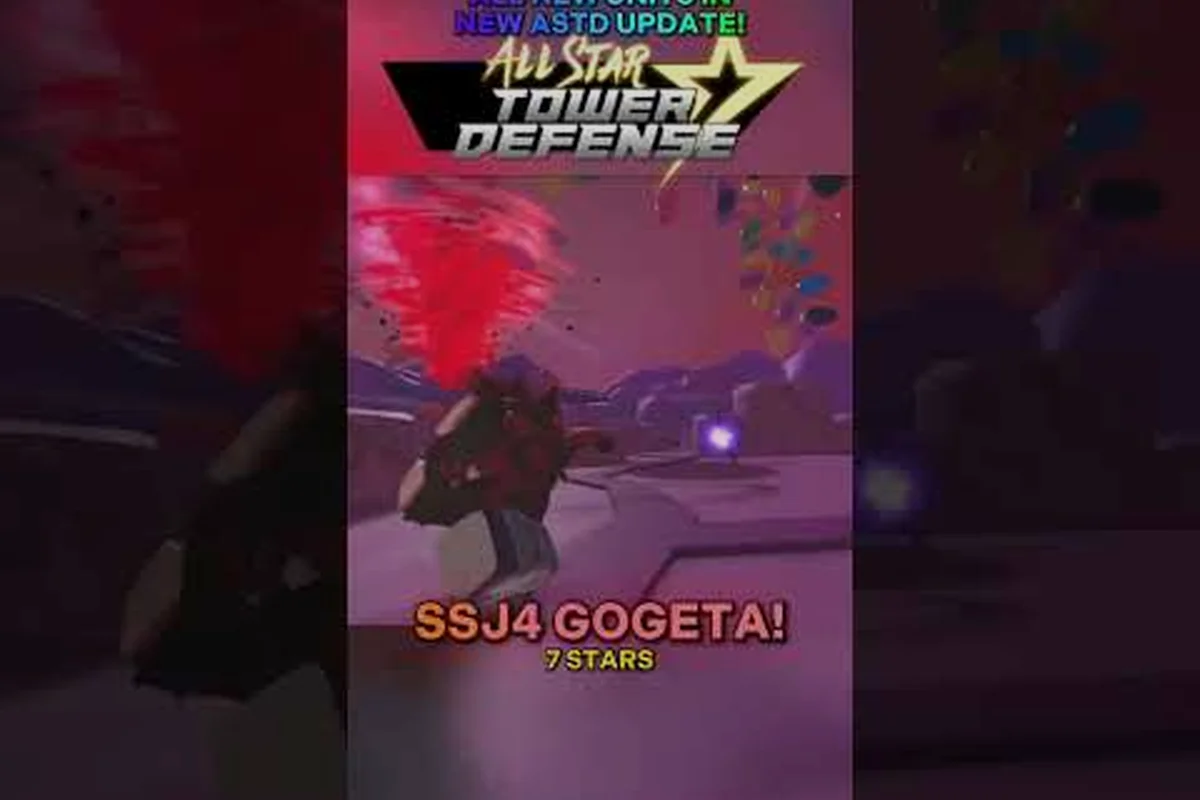
The All Star Tower Defense starhunt update has landed, and it's reshaping how players approach summoning, team composition, and resource management across the board. This patch introduces the Dual Starhunt Summons system, a fresh batch of limited fighters, and meaningful balance changes that affect both casual and competitive play. If you've been sitting on Stardust or Gems waiting for the right moment to pull, this update guide breaks down exactly what changed, which units deserve your attention, and how to maximize every summon rotation before the event window closes.
The starhunt update arrives during the summer anniversary window, which means the event calendar is packed with limited-time banners, boosted rates, and exclusive rewards tied to the All Star subscription tier. Because the Dual Starhunt banners persist for only a fixed number of hours before rotating, understanding the schedule and pity mechanics becomes essential for anyone chasing featured units like Aqua Koku (Red Spirit) or Sage King. Let's break down everything you need to know about this patch, from banner economics to unit evaluations.
Starhunt Update Overview
The All Star Tower Defense starhunt update marks a significant departure from the standard Hero Summon experience. According to the official Roblox game page and community wiki documentation, the Dual Starhunt Summons operate as Stardust banners separate from the Hero Summon, persisting for a limited number of hours before cycling to the next rotation. This creates a sense of urgency that rewards players who plan ahead and stockpile resources between events.
The headline feature is the 10-summon rotation system, where players pay 150 Stardust for a full rotation that includes three 10-pulls plus a fourth free. That's effectively 40 units for the price of 30, which represents a meaningful discount compared to standard summoning rates. Community reports suggest this structure was designed specifically for the anniversary celebration, making it one of the most cost-efficient ways to expand your roster during the event window.
| Feature | Standard Hero Summon | Dual Starhunt Summons |
|---|---|---|
| Currency | Gems | Stardust |
| Cost per 10-pull | 450 Gems | 150 Stardust (3x + 1 free) |
| Featured unit rate | +1.5% on rate-up | 1%-2% featured rates |
| Pity system | Soft at 70, hard at 90 | Rotation-based, no permanent pity |
| Duration | Always available | Fixed hours, rotates banners |
| Exclusive units | Limited to event pools | Aqua Koku, Sage King, Organs, etc. |
What makes this update particularly interesting is the red spirit-bomb animation that guarantees a featured unit when triggered. Players who see this animation during their pulls know they've hit the jackpot, and community data indicates the featured-unit chance sits between 0.5% and 0.75% per pull, with global rates at 99% distributed across the remaining pool. That means roughly 1% of pulls land on the featured unit, which is competitive with other gacha systems in the Roblox tower defense space.
The all star tower defense event update also introduces a rotating schedule of banners labeled A through F, each featuring different units. Banner A kicked things off with Aqua Koku (Red Spirit) and Sage King, while subsequent rotations include Organs (Golden), Borul (SUPA), Falcon, Magma Marine, Freezer, Jon Jo II, Ruffy (Kid), Soul Snatcher, The Strongest One, and Mysterious X (Honored). This variety ensures that different playstyles and team compositions get their moment in the spotlight.
Units Added in the Starhunt Patch
The all star tower defense balance changes in this patch extend beyond summoning mechanics into unit performance itself. Several fighters received adjustments based on community feedback and internal testing, with the goal of creating a more diverse meta where multiple strategies remain viable. According to player reports from the official Discord and Reddit communities, the development team focused on reducing the dominance of top-tier units while elevating mid-tier options that previously struggled to find a place in competitive lineups.
Starhunt Update Overview
The Dual Starhunt Summons system represents the core of this update, introducing a parallel summoning track that uses Stardust instead of Gems. This separation matters because it allows dedicated players to pursue limited units without sacrificing their Gem reserves for standard pulls. The 150 Stardust per full rotation pricing structure means you can complete roughly six rotations for what a single 10-pull costs in Gems, assuming you've been actively farming Stardust through daily quests and event missions.
New Units in the Update
The featured roster includes several units that are generating significant buzz in the community. Aqua Koku (Red Spirit) stands out as a high-damage dealer with unique mechanics tied to the spirit-bomb animation, while Sage King offers utility through buffs that amplify nearby allies. Organs (Golden) brings a defensive profile that fits well into stall strategies, and Borul (SUPA) rounds out the early banner with burst damage potential that rewards precise positioning.
| Unit | Rarity | Role | Banner | Community Rating |
|---|---|---|---|---|
| Aqua Koku (Red Spirit) | Featured | DPS | A | 9/10 |
| Sage King | Featured | Support/Buffer | A | 8.5/10 |
| Organs (Golden) | Featured | Tank/Defense | B | 7.5/10 |
| Borul (SUPA) | Featured | Burst DPS | B | 8/10 |
| Falcon | Featured | Hybrid | C | 7/10 |
| Magma Marine | Featured | AoE DPS | C | 7.5/10 |
The all star tower defense anniversary update context matters here because several of these units were designed specifically for the celebration. Community testing suggests that Aqua Koku (Red Spirit) pairs exceptionally well with Sage King in a support-heavy composition, since the attack buffs compound with the spirit-bomb mechanic to produce massive damage spikes during boss fights. Players who managed to pull both units report clearing content that previously required specific meta units, which speaks to the power level of this banner.
Starhunt Banner and Summon Shifts
Understanding the banner rotation schedule is critical for anyone planning to spend Stardust during the starhunt update. Each banner persists for a fixed number of hours before cycling, which means you cannot simply wait indefinitely to make your pulls. Community reports indicate that banners rotate roughly every 24-48 hours, though the exact timing may vary based on server maintenance and hotfixes. The official Twitter/X account for All Star Tower Defense posts rotation announcements, so following that account is the most reliable way to stay informed.
The featured rates for Dual Starhunt Summons differ meaningfully from the standard Hero Summon. While standard rate-up banners add +1.5% to the featured unit's tier rate, the Dual Starhunt banners feature rates between 1% and 2% for featured units overall. The featured-unit chance sits at 0.5% to 0.75% per pull, which means you'll likely need multiple rotations to secure a specific unit unless you trigger the red spirit-bomb animation that guarantees a featured drop.
| Summon Type | Cost | Featured Rate | Pity | Best For |
|---|---|---|---|---|
| Standard 1-pull | 50 Gems | Base rates | Soft 70, Hard 90 | Daily pulls, filling roster |
| Standard 10-pull | 450 Gems | +1.5% rate-up | Soft 70, Hard 90 | Rate-up chasing |
| Dual Starhunt 10-pull | 150 Stardust | 1%-2% featured | No permanent pity | Limited unit hunting |
| Dual Starhunt rotation | 150 Stardust | 4x 10-pulls | No permanent pity | Best value per currency |
The all star tower defense all star subscription adds another layer to the summoning economy. Subscribers receive bonus Stardust allocations during event windows, which effectively reduces the cost of completing full rotations. Community data suggests that active subscribers can complete roughly 50% more rotations during a standard event compared to free-to-play players, assuming both groups farm Stardust at similar rates. This makes the subscription a meaningful investment for players who plan to chase multiple featured units across different banners.
Starhunt Limited Fighters
The limited unit pool in this update includes fighters that may not return after the event concludes, which creates a fear of missing out dynamic that drives summoning activity. Based on the banner schedule, units like Aqua Koku (Red Spirit) and Sage King are likely to be exclusive to this anniversary celebration, while others like Falcon and Magma Marine may appear in future events. The official wiki maintains a list of past limited units, and community speculation suggests that the development team rotates older limited units back into circulation during major updates.
Banner and Summon Changes
The Dual Starhunt Summons operate on a separate currency system, which means you need to manage both Gems and Stardust effectively to maximize your pulls. Stardust is primarily earned through daily quests, event missions, and the All Star subscription, while Gems come from story progression, daily logins, and code redemptions. Players who focus exclusively on Gems will miss out on the limited units in this update, so diversifying your resource farming is essential.
Starhunt Limited Unit Roster
Evaluating which limited units deserve your Stardust requires understanding their role in current meta compositions. Aqua Koku (Red Spirit) excels in single-target burst scenarios, making it ideal for boss fights and Infinity Tower progression. Sage King provides team-wide buffs that scale with investment, which means it remains relevant even as new units release. Organs (Golden) offers a defensive anchor that stabilizes team compositions, though its damage output is lower than dedicated DPS units.
| Unit | Strengths | Weaknesses | Best Game Mode |
|---|---|---|---|
| Aqua Koku (Red Spirit) | Massive burst, spirit-bomb synergy | Long cooldowns, positioning-dependent | Boss fights, Infinity Tower |
| Sage King | Team buffs, utility | Low personal damage | Story Mode, co-op |
| Organs (Golden) | Tanky, crowd control | Low DPS, slow attack speed | Hard Mode, defense maps |
| Borul (SUPA) | Burst damage, fast attacks | Fragile, requires protection | Speed runs, wave clear |
The summer update context adds another layer of relevance, since several of these units have thematic ties to the seasonal event. Community reports suggest that Magma Marine and Freezer were designed as a complementary pair, with the former providing fire-based damage and the latter offering ice-based crowd control. Players who build teams around elemental synergies report better performance in the new event stages, which suggests the development team is encouraging more diverse team building.
Starhunt Rewards and Currency
The Stardust economy is the backbone of the starhunt update, and understanding how to earn and spend it efficiently determines your overall success during the event. According to community data, Stardust is earned through daily quests (approximately 30-50 per day), event missions (variable rewards), and subscription bonuses (additional 20-30 per day). The All Star subscription also provides a daily Stardust multiplier that compounds over the event duration, making it significantly easier to complete multiple rotations.
| Currency Source | Amount | Frequency | Notes |
|---|---|---|---|
| Daily quests | 30-50 Stardust | Daily | Scales with account level |
| Event missions | 50-150 Stardust | Per mission | Limited-time objectives |
| All Star subscription | +20-30 Stardust | Daily | Requires active subscription |
| Login bonuses | 10-20 Stardust | Daily | Part of anniversary rewards |
| Code redemptions | 25-100 Stardust | One-time | Check official Twitter/X |
The reward structure for the starhunt update extends beyond summoning. Players who complete specific event milestones receive exclusive titles, emotes, and unit skins that aren't available through standard gameplay. The official Roblox page mentions that new items appear in the Summon Gate and Emote Shop every hour, which means checking back regularly can yield unexpected bonuses. Community reports suggest that the anniversary celebration includes a log-in streak bonus that rewards consistent players with additional Stardust and Gems.
How to Prepare for Starhunt
Preparation is the difference between a successful event and a frustrating one, and the all star tower defense update guide community has developed several strategies for maximizing value during the starhunt window. The first step is stockpiling Stardust before the event begins, since the Dual Starhunt banners require this currency and it cannot be purchased directly with Robux. Players who started farming two weeks before the anniversary report having 500-800 Stardust available on day one, which translates to roughly 3-5 full rotations depending on subscription status.
Starhunt Rewards and Currency
The Stardust-to-rotation ratio is the most important metric to track during the event. Each full rotation costs 150 Stardust and provides 40 units (three 10-pulls plus one free). That means you need roughly 3.75 Stardust per unit, which is significantly more efficient than the standard Hero Summon's 45 Gems per unit for a 10-pull. However, the tradeoff is that Stardust is harder to earn than Gems, so you need to prioritize which banners deserve your limited resources.
How to Prepare for Starhunt
Step 1: Complete all daily quests starting at least one week before the event, since each daily quest rewards 50–100 Stardust depending on difficulty, and skipping even a single day can cost you up to 700 Stardust before Starhunt even begins. Because the Starhunt update’s premium banner units (like the limited-time anniversary units) require 3,000+ Stardust for a full 10-pull, banking this reserve early ensures you can roll on day one without grinding mid-event. Additionally, finishing quests while the all star tower defense balance changes are live lets you adapt to any unit nerfs or buffs before they matter in the event’s boss rush stages.
Step 2: Save your Gems for standard pulls rather than converting them to Stardust. The Dual Starhunt banners require Stardust exclusively, and converting Gems at unfavorable rates will leave you short on both currencies. With the all star tower defense starhunt update introducing limited-time units like the Starhunt Goku and Starhunt Vegeta, the 10-pull pity system on standard banners becomes your most reliable path to accumulating those units, whereas a single Stardust conversion can cost you up to 500 Gems for a fraction of a single pull. Prioritize the standard banner's guaranteed 4-star every 10 pulls to build your roster depth, then reserve any leftover Gems for the Stardust exchange only if you are within 20 pulls of the Starhunt banner's featured unit pity.
Step 3: Monitor the banner rotation schedule through the official Twitter/X account. Knowing which units appear in which banners lets you plan your pulls around your team's specific needs. For the Starhunt update, this is especially critical because the event introduces limited-time Starhunt-exclusive units like the buffed Dark Emperor and the new Ainz Ooal Gown variant, which rotate alongside the standard All Star Subscription and anniversary banners. Since the Starhunt banner pool shifts every 48 hours, tracking the schedule in advance ensures you don't waste your hard-earned gems on a banner lacking your priority unit—such as saving for a Tier 0 damage dealer instead of spending on a support-heavy rotation. A quick daily check of the official feed, cross-referenced with community datamined schedules, gives you a 24-hour window to adjust your gem reserves and star fragments for optimal pull efficiency.
Step 4: Activate the All Star subscription if you plan to complete multiple rotations. The daily Stardust bonus compounds significantly over a two-week event, potentially adding 300-400 extra Stardust to your total. Since each Starhunt rotation costs roughly 150 Stardust to unlock all three exclusive unit pulls—including the limited-time anniversary units—that extra buffer effectively funds two additional full rotations without grinding extra raids. For players aiming to max-out the new 6-star unit before the summer event ends, this subscription advantage often separates those who finish the battle pass track from those who fall short by the final day.
Step 5: Coordinate with friends for co-op farming. The hard mode guide and event stages offer bonus Stardust for group completion, and experienced players can carry newer teammates through higher difficulties for increased rewards. On the Starhunt event's "Nightmare" difficulty, each extra player in the lobby boosts the final Stardust multiplier by 15%, stacking up to a 60% bonus with a full squad. Pair this with the All Star Subscription's 2x Stardust passive, and a coordinated team can net over 3,000 Stardust per 20-minute run—roughly double what a solo player earns on the same stage. Prioritize assigning one player to a pure DPS unit like Blackbeard while another focuses on stall units (e.g., Aizen) to maximize wave clear efficiency and survival.
The all star tower defense balance changes also affect which units are worth prioritizing. Units that received buffs in this patch are generally better investments, since they'll remain relevant in future content. Conversely, units that received nerfs may struggle to justify their Stardust cost, especially if you're a free-to-play player with limited resources. Community tier lists updated after the patch provide a useful reference, though you should always consider your specific team composition and playstyle.
For players who want to dive deeper into summoning mechanics, the All Star Tower Defense summoning guide on BloxMeta offers detailed breakdowns of pity systems and rate calculations. The official All Star Tower Defense wiki maintains current banner information and unit data, which is particularly useful for tracking which units are featured in each rotation. You can also check the official Roblox game page for the latest announcements and update notes, and watch All King's summoning showcase on YouTube to see the new units in action before committing your Stardust.
The all star tower defense event update also includes quality-of-life improvements that affect daily play. The Summon Gate refresh timer has been reduced from hourly to every 30 minutes during the event, which means more opportunities to encounter rare units in the free summon pool. The Emote Shop received new anniversary-themed emotes that can be purchased with event currency, and several balance changes to existing units were implemented based on community feedback from the previous patch cycle.
If you're still deciding which banners to pull on, consider your current team composition and content goals. Players focusing on Infinity Tower progression should prioritize Aqua Koku (Red Spirit) and Sage King, since their synergy provides the burst damage and buffs needed for high-floor clears. Players working through Story Mode or Hard Mode may benefit more from Organs (Golden) and Borul (SUPA), which offer defensive stability and consistent damage respectively. The All Star Tower Defense update guide covers broader patch notes and meta shifts, while the summoning guide explains the mechanics behind both standard and special summons in detail.
What's your strategy for the starhunt update? Are you saving Stardust for a specific banner, or pulling on every rotation to maximize your roster? Share your pulls and team compositions in the comments below, and don't forget to check the official Twitter/X account for code drops and rotation announcements throughout the event.
Frequently Asked Questions
How long does the All Star Tower Defense starhunt update last?
The starhunt update runs for approximately two weeks as part of the anniversary celebration, though the exact end date may shift based on server maintenance and hotfixes. The Dual Starhunt Summons banners rotate every 24-48 hours during this window, so you'll have multiple chances to pull featured units before the event concludes.
What is the best way to earn Stardust quickly?
Complete all daily quests, focus on event missions with Stardust rewards, and activate the All Star subscription if you plan to pull extensively. Community data suggests that active players can earn 300-500 Stardust per week through consistent play, which translates to 2-3 full rotations on the Dual Starhunt banners.
Are the limited units from the starhunt update coming back?
Yes, the limited units from the Star Hunt update—Star Hunter and Hallow Star—are event-exclusive and won't join the permanent pool. They only appear during their limited-time banner. However, All Star Tower Defense frequently brings back past limiteds during special celebrations or rerun banners, so watch upcoming update logs for a possible return.
Should I spend Gems or Stardust during the starhunt update?
Focus on Stardust for the Dual Starhunt banners, since they offer better value per pull and feature exclusive units. Save your Gems for standard Hero Summons, which have a permanent pity system and remain available after the event ends. Converting Gems to Stardust is generally inefficient and should be avoided.
What is the red spirit-bomb animation in the starhunt update?
The red spirit-bomb animation is a special pull effect that guarantees a featured unit from the current banner. Community reports indicate the trigger rate is low, but when it appears, you're guaranteed one of the banner's featured units rather than a random drop from the global pool.