
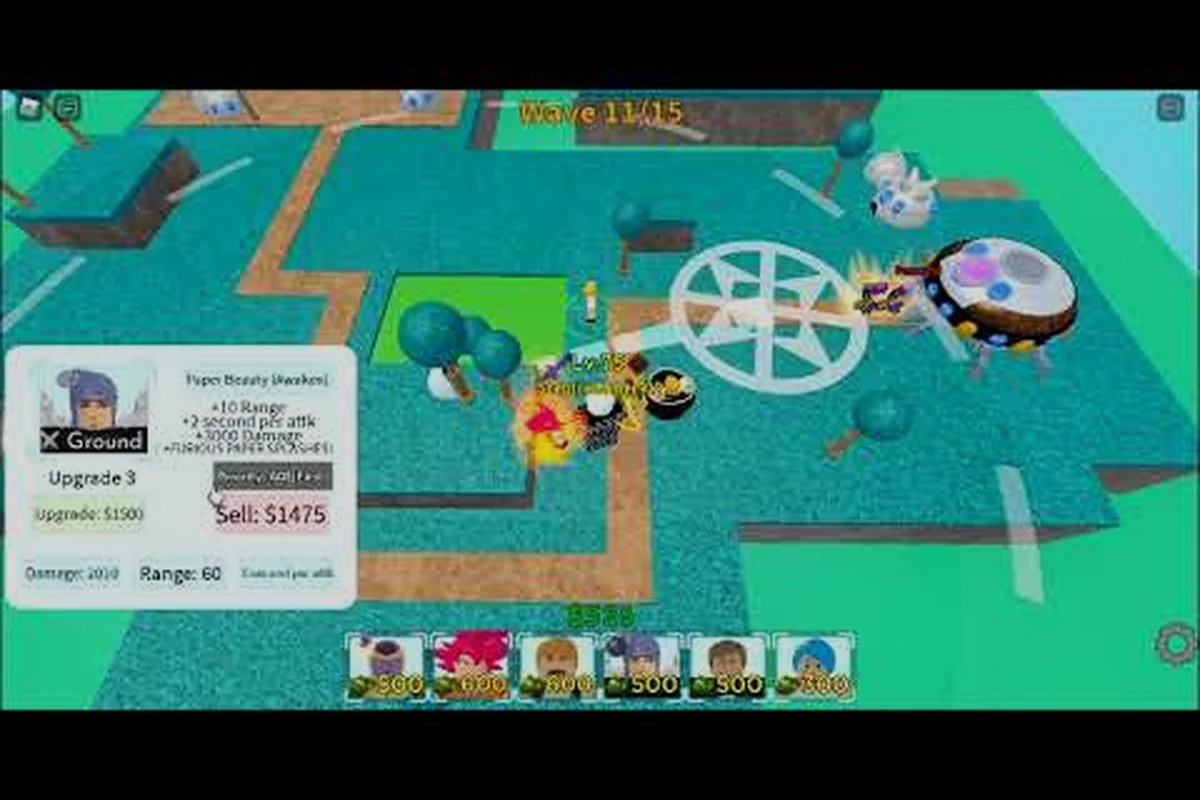
The all star tower defense beginner saga is the first major content block you'll face in ASTD, and it sets the pace for everything that follows. This guide breaks down the full 56Completing all 56 stages for the first time grants roughly 1,500 gems in total, including stage completion rewards and first-clear bonuses. Three-starring every stage adds another 800 gems, bringing the total to around 2,300 gems from the full saga. This early influx is vital for beginners, as it funds your first meta units and helps you tackle the all star tower defense beginner saga efficiently, while also preparing you for raid bosses and infinite mode team setups.ge 30 because they invest in units that look strong on paper but fall apart against boss waves. Knowing which units carry you through the beginner saga and which rewards actually matter for late-game progression saves you hours of grinding and prevents costly reroll mistakes.
Beginner Saga Structure and Stage Breakdown
The all star tower defense beginner saga spans 56 story stages split across two distinct worlds, with each world introducing new enemy types and map layouts that force you to adapt your placement strategy. World 1 covers stages 1 through 30, while World 2 pushes you through stages 31 to 56, and the difficulty spike between these two halves is significant enough that players who breeze through the first world often struggle immediately upon entering the second.
According to community reports from the ASTD Discord, the beginner saga serves as a tutorial wrapped in a full campaign — it teaches you the core mechanics of unit placement, upgrade timing, and economy management while gradually introducing boss mechanics that appear in later game modes like raids and the Infinity Tower.
| Stage Range | World | Key Enemy Types | Recommended Unit Level | Primary Challenge |
|---|---|---|---|---|
| 1-10 | World 1 | Basic grunts, slow walkers | Level 20-40 | Learning placement basics |
| 11-20 | World 1 | Fast runners, shielded units | Level 40-60 | Speed management |
| 21-30 | World 1 | Mini-bosses, aerial units | Level 60-80 | First boss encounters |
| 31-40 | World 2 | Heavy armor, healers | Level 80-100 | Damage output checks |
| 41-50 | World 2 | Boss waves, mixed swarms | Level 100-120 | Wave composition planning |
| 51-56 | World 2 | Endgame bosses | Level 120+ | Final saga challenge |
The stage rewards scale with difficulty, and the all star tower defense story rewards include gems, gold, and occasionally star-up materials that are essential for evolving your units. You'll earn roughly 1,500 gems from completing the full beginner saga for the first time, which is enough for several multi-summons at the Gate.
World 1 Progression Tips
World 1 stages are designed to ease you into the game's mechanics, but that doesn't mean you should sleepwalk through them. The early stages reward efficient gem spending, and players who summon strategically during the first 10 stages build a stronger foundation for the later boss fights.
Focus on building a balanced team of ground units, ranged attackers, and at least one area-of-effect dealer before Stage 15. The fast runners that appear in stages 11-20 will shred teams that rely solely on single-target damage, and you'll need splash damage to keep your base safe.
World 2 Difficulty Spike
World 2 introduces armored enemies that reduce incoming damage by a flat percentage, which means your low-level units will feel significantly weaker even if they performed well in World 1. This is where the all star tower defense beginner saga tests your understanding of unit synergy rather than raw power.
Players who reach World 2 without a proper team composition often find themselves stuck for days, and the most common advice from veteran players is to revisit earlier stages for gem farming before pushing forward. The stage 45 boss, in particular, has been reported by players as the single hardest wall in the beginner saga.
How to Unlock World 2 and Beyond
The all star tower defense how to unlock world 2 question is one of the most searched topics in the community, and the answer is straightforward once you understand the progression system. You need to complete all 30 stages in World 1 with at least a one-star rating on each, which means finishing every wave without letting enemies reach your base.
The star rating system rewards flawless runs with bonus gems, and achieving three stars on every stage in World 1 grants you a one-time reward of 300 gems plus a special title cosmetic. While you don't need three stars to unlock World 2, going back for perfect runs is one of the most efficient gem farming methods available to new players.
| Unlock Requirement | Stage Count | Reward | Notes |
|---|---|---|---|
| Complete World 1 | 30 stages | World 2 access | Any star rating works |
| 3-star all World 1 | 30 stages | 300 bonus gems | Requires flawless runs |
| Complete World 2 | 26 stages | Infinity Tower access | Unlocks endless mode |
| 3-star all World 2 | 26 stages | 500 bonus gems | Endgame farming goal |
After clearing the beginner saga, you'll unlock the Infinity Tower, which is the primary endgame farming mode for gems and stardust. The all star tower defense infinite mode team you build for this mode will differ from your story team because the wave scaling continues indefinitely, requiring sustainable damage output rather than burst damage.
Post-Saga Unlocks
Once you complete all 56 stages, the game opens up significantly, transforming the beginner saga into a true endgame grind. You gain access to raid battles, where you’ll face all star tower defense raid bosses like the God and Dark Frieza, requiring specialized best raid units such as DKP or Bulma for optimal damage; the Infinity Tower demands a dedicated all star tower defense infinite mode team to climb for exclusive gems; and eventually the tournament mode pits you against other players weekly, with all star tower defense tournament rewards including rare unit tickets that directly accelerate your progression toward world 2 unlocks.
The all star tower defense tournament rewards include exclusive units, large gem payouts, and stardust bundles that are otherwise difficult to obtain. Tournament participation requires a team that can handle both boss waves and competitive pressure, which is why many players spend weeks optimizing their roster after finishing the beginner saga.
Raid Bosses and Best Raid Units
The all star tower defense raid bosses are a major step up from anything you face in the beginner saga, and they require specialized team compositions that focus on single-target damage and survivability. Unlike story stages where you need balanced coverage, raids are pure DPS checks with a time limit.
According to player testing, the current raid rotation includes five bosses with different mechanics, and each one demands a different approach. The Crimson Colossus has massive health but moves slowly, while the Void Reaper teleports around the map and requires precise timing to hit.
| Raid Boss | Health Pool | Key Mechanic | Recommended Units | Difficulty |
|---|---|---|---|---|
| Crimson Colossus | 2.5M | Slow, high armor | Single-target DPS | Medium |
| Void Reaper | 1.8M | Teleporting | Fast attackers | Hard |
| Frost Titan | 3.2M | Freezing aura | Fire units | Hard |
| Shadow Warden | 2.1M | Summons minions | AoE + single target | Medium |
| Infernal Dragon | 4.0M | Flying, fire breath | Anti-air units | Very Hard |
The all star tower defense best raid units prioritize raw damage per second over utility, and the current meta favors units like Blackstache and Koku for their sustained output. However, you don't need top-tier units to clear raids — a well-leveled team of A-tier units can handle most raid bosses if you position them correctly.
Building Your Raid Team
Your raid team should focus on three core roles: a main damage dealer, a support unit that buffs attack speed or damage, and a tank that can absorb boss attacks while your DPS units do their work. The support role is often overlooked by new players, but the difference between a buffed and unbuffed DPS unit in raids is significant enough to decide the fight.
For players who just finished the all star tower defense beginner saga, the best approach is to level up your strongest story units and gradually replace them with raid-specific picks as you earn more gems. The top 10 units guide breaks down which units are worth your investment for both story and raid content.
Raid Rewards and Rotation
Raid rewards reset weekly, and the payout scales with your performance, so even a modest clear on Normal difficulty yields a steady trickle of gems and stardust for early-game upgrades. However, pushing through the hardest difficulty against bosses like the Dark Fist or Demon King is where the real payoff lies: a full clear grants 500 gems, 200 stardust, and a chance at exclusive unit drops—such as the limited-time Raid Exclusives—that can't be obtained anywhere else. This makes the weekly reset a critical cadence for beginners, since those 500 gems alone can fund multiple summons or unlock key upgrades, while the stardust accelerates unit evolution—a vital edge when you're still grinding toward the all star tower defense how to unlock world 2 milestone and need every advantage against tougher raid rotations.
The raid rotation changes every two weeks, and the community tracks the schedule on the official Roblox page for All Star Tower Defense. Checking the rotation before building your team saves you from investing in units that won't be useful for the current boss.
Story Rewards and Farming Efficiency
The all star tower defense story rewards are the backbone of your early-game economy, and knowing which stages to farm for gems versus experience makes a huge difference in your progression speed. Stage 45 is widely considered the best gem farming stage in the beginner saga because it offers a high gem payout relative to its difficulty.
For experience farming, stages 25-30 in World 1 offer the best experience-to-time ratio because the enemy waves are dense but easy to clear with area damage. Players who need to level up multiple units quickly should rotate between these stages rather than pushing into World 2 prematurely.
| Farming Goal | Best Stage | Reward per Run | Time per Run | Efficiency Rating |
|---|---|---|---|---|
| Gems | Stage 45 | 45-60 gems | 4-5 minutes | Excellent |
| Experience | Stage 28 | 800-1000 XP | 3 minutes | Great |
| Gold | Stage 52 | 2,500-3,000 gold | 6 minutes | Good |
| Stardust | Stage 56 | 20-30 stardust | 7 minutes | Moderate |
The daily login bonus also provides a steady stream of gems, and players who log in every day earn roughly 300 gems per week without playing a single stage. Combining daily rewards with targeted stage farming gives you enough gems for a multi-summon every few days.
Maximizing Your Story Farming
The key to efficient farming is speed over difficulty. While harder stages offer better rewards, the time investment often makes them less efficient than farming a slightly easier stage with a faster clear time. Community testing shows that a stage you can clear in under three minutes is almost always better for gem farming than a stage that takes seven minutes, even if the latter offers more gems.
Players who want to maximize their all star tower defense story rewards should also complete daily quests that refresh every 24 hours. These quests award bonus gems, gold, and occasionally summon tickets, and they take less than 15 minutes to complete.
Infinite Mode Team Composition
The all star tower defense infinite mode team you build after completing the beginner saga determines how far you can push in the endless tower. Unlike story stages where you need to survive a fixed number of waves, Infinite Mode scales enemy health and damage indefinitely, which means your team needs sustainable damage rather than burst potential.
The core of any successful Infinite Mode team is at least two area-of-effect units that can handle the massive swarms that appear after wave 30. Single-target units become increasingly useless as enemy counts grow, and players who rely on them typically fall off by wave 40.
| Unit Role | Recommended Unit | Why It Works | Alternative |
|---|---|---|---|
| Main AoE | Blackstache | Massive splash damage | Ruffy |
| Secondary AoE | Vegu | Fast attack speed | Zaruto |
| Support | Koku | Attack speed buff | Any buffer |
| Boss killer | Any S-tier single target | Handles mini-bosses | — |
The placement strategy for Infinite Mode differs from story mode because you need to cover multiple entry points while maintaining a central kill zone where your AoE units overlap. The story maps guide explains how map layouts affect your placement decisions, and the same principles apply to Infinite Mode.
Infinite Mode Economy
Managing your economy in Infinite Mode is more important than your team composition. You need to balance spending on unit upgrades against saving for additional summons, and the optimal strategy changes as the waves progress. Early on, prioritize cheap upgrades for your starter units to survive the first ten waves, but by wave 15, you should bank at least 500 gold for a high-tier summon—otherwise, you'll hit a DPS wall against the boss rush that follows. A common beginner mistake is over-upgrading a single unit to max level, which drains your reserves and leaves you unable to pivot when the next wave introduces flying enemies. Instead, adopt a 60/40 split: spend 60% of your income on upgrades and save 40% for summons, then adjust toward saving more aggressively every five waves as enemy health spikes. This disciplined approach ensures you always have a response to the game's escalating threats without stalling your economy.
In the early waves, focus on building your economy by placing cheap units and upgrading them gradually. By wave 20, you should have your core team placed and upgraded to at least level 50, and from wave 30 onward you should be saving gems for emergency summons rather than spending them freely.
Weekly Tournament Prizes and Leaderboard Play
The all star tower defense tournament rewards are the endgame goal for many players, and the tournament system operates on a weekly cycle where players compete for the highest score on a rotating set of stages. Tournament scores are based on clear time, remaining base health, and bonus objectives, which means you need both a strong team and efficient execution.
The tournament rewards scale with your final rank, and the top 100 players receive exclusive units that are unavailable anywhere else. Even players who finish in the top 10% receive substantial gem and stardust payouts that make tournament participation worthwhile.
| Tournament Rank | Gem Reward | Stardust Reward | Exclusive Rewards |
|---|---|---|---|
| Top 10 | 5,000 | 2,000 | Exclusive unit |
| Top 100 | 2,500 | 1,000 | Rare cosmetic |
| Top 1,000 | 1,000 | 500 | Summon tickets |
| Top 10,000 | 500 | 200 | Gold bundle |
| Participation | 100 | 50 | — |
The tournament meta diverges sharply from story and raid content because speed is the primary factor. In this competitive mode, units that clear waves quickly with minimal downtime—such as those with fast attack animations and short cooldowns—consistently outperform higher-damage options like the slow-hitting Raid Boss units you might rely on elsewhere. For example, a maxed-out Goku (Super Saiyan) or Naruto (Six Paths) can shred early tournament waves in seconds, whereas a unit like Gilgamesh deals massive damage but wastes precious ticks on its lengthy swing. This trade-off matters because tournament rewards scale with wave count reached, not total damage dealt, so every second lost to a sluggish animation directly reduces your final reward tier. Prioritize attack speed and splash damage over brute force to climb the leaderboard efficiently.
Preparing for Tournament
If you're just finishing the all star tower defense beginner saga, the tournament should be a long-term goal rather than an immediate priority. Focus on completing the story, building a solid Infinite Mode team, and accumulating gems through daily play before attempting serious tournament runs.
Players who want to compete at a high level should also study the tournament stage rotation and practice on the specific maps that appear in the current cycle. The World 2 guide covers advanced strategies for the harder stages, and many of those techniques transfer directly to tournament play.
Advanced Tips for Post-Saga Content
Once you've completed the all star tower defense beginner saga, the game opens up into a much larger content ecosystem that includes raids, tournaments, and the Infinity Tower. Each mode requires a different team composition, and the units you invested in during the story may not carry you through all of them.
The star level system becomes increasingly important after the saga, and players who want to tackle the hardest content need to invest in star-up materials that increase a unit's maximum level and stats. The star level guide explains the requirements and the most efficient ways to farm the necessary materials.
Resource Management After the Saga
Your gem spending strategy should change dramatically after completing the beginner saga. During the story, you want to summon frequently to build a diverse roster, but after the saga, you should save your gems for limited-time banners that feature exclusive units.
The stardust economy also becomes more important, and players who accumulate stardust through daily play and event participation can summon from the stardust banner without spending gems. This banner rotates its featured units regularly, and checking the rotation before spending your stardust ensures you pull for units that fit your team composition.
Common Mistakes to Avoid
The most common mistake players make after finishing the beginner saga is spreading their resources too thin across too many units. Instead of leveling every unit you own, focus on a core team of six to eight units that cover all the roles you need for different game modes.
Another frequent mistake is ignoring support units in favor of pure damage dealers. While damage is important, a well-placed support unit that buffs your main DPS can increase your overall output by 30-40 percent, which is often the difference between clearing and failing a raid boss.
Frequently Asked Questions
What is the all star tower defense beginner saga?
The beginner saga is the first 56 story stages in ASTD, split across World 1 and World 2. It serves as the game's tutorial campaign, teaching core mechanics while rewarding players with gems, gold, and star-up materials. Completing it unlocks raids, the Infinity Tower, and tournament mode.
How do I unlock World 2 in ASTD?
You unlock World 2 by completing all 30 stages in World 1 with at least one star on each stage. Three-starring every World 1 stage grants a bonus of 300 gems, but it's not required for progression. Focus on completing stages first, then revisit for perfect runs.
What are the best raid units for beginners?
For players finishing the beginner saga, the best raid units are Blackstache for area damage, Koku for single-target DPS, and Ruffy for crowd control. These units are available from the standard summon pool and perform well in most raid encounters without requiring exclusive banner pulls.
How many gems can I earn from the beginner saga?
Completing all 56 stages for the first time grants roughly 1,500 gems in total, including stage completion rewards and first-clear bonuses. Three-starring every stage adds another 800 gems, bringing the total to around 2,300 gems from the full saga.
What is the best infinite mode team after the saga?
The best infinite mode team after the saga combines two area-of-effect units like Blackstache and Vegu, with Koku providing attack-speed buffs and any S-tier single-target unit handling mini-bosses. This composition delivers sustainable damage that keeps up with the endless wave scaling, surviving well past wave 40 when placed in a central kill zone and leveled consistently.